Lectures of the J.P. and Beena Khaitan Visiting Fellow
Was Sāṃkhya non-Vedic?
Week 2, Thursday 22 October 2.00-3.00, OCHS
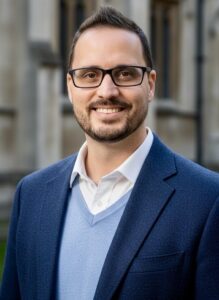
Professor Knut Jacobsen
As late as in the 8th century CE, the philosopher and promoter of Advaita Vedānta, Śaṅkara argued strongly and repeatedly in his Brahmasūtrabhāṣya that the Sāṃkhya system of religious thought was a non-Vedic system, that it had no support in the Veda and was even fundamentally opposed to the Vedic views. He argued that the two main doctrines of Sāṃkhya, the independence of pradhāna or prakṛti (principle of matter) and the plurality of puruṣas (principle of consciousness) were unacceptable and opposed to the Veda because they were contradicted by the doctrine of the oneness of brahman. There are good reasons to accept that Śaṅkara was right, that Sāṃkhya was non-Vedic. However, Sāṃkhya did later appear as an āstika tradition and was included among the so-called six darśanas and this inclusion gives the impression of Sāṃkhya having a Vedic origin. In this lecture I evaluate the arguments for a non-Vedic origin of Sāṃkhya in scholarship and in the Sanskrit sources and its appearance as an āstika tradition.
Knut A. Jacobsen is professor in the study of religions at the University of Bergen, Norway and a senior fellow of the Oxford Centre for Hindu Studies. His research focuses on Sāṃkhya-Yoga in Hindu culture and society, Hinduism in the world, Hindu conceptions and rituals of space and time, and the plurality of religious traditions and practices in South Asia. His publications include numerous articles and edited volumes and five monographs, Hinduism in the World (Routledge, 2025), Yoga in Modern Hinduism: Hariharānanda Āraṇya and Sāṃkhyayoga (Routledge, 2018), Pilgrimage in the Hindu Tradition: Salvific Space (Routledge, 2013), Kapila: Founder of Sāṃkhya and Avatāra of Viṣṇu (Munshiram Manoharlal, 2008), and Prakṛti in Sāṃkhya-Yoga (Peter Lang; 1999). Jacobsen is the founding editor in chief of the seven volumes Brill’s Encyclopedia of Hinduism, and he is an Elected member of Academia Europaea as well as The Norwegian Academy of Science and Letters.