A Jain Studies talk organised by Dr Ruth Westoby
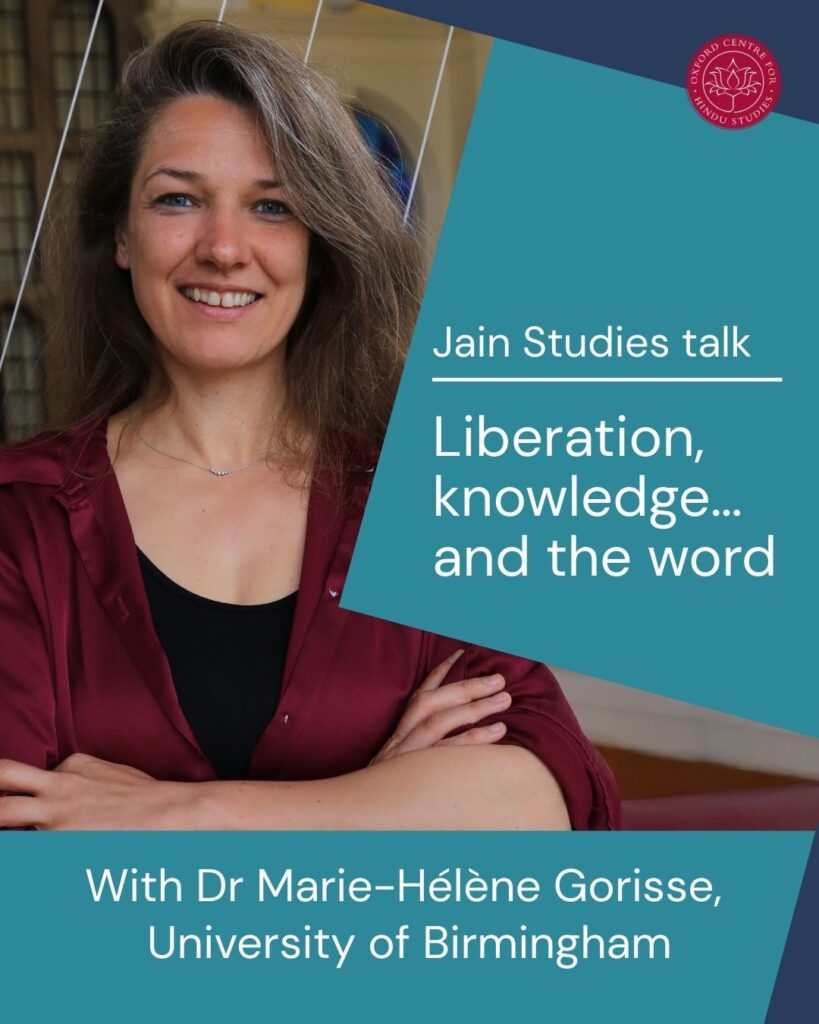
In his entry “Kaivalya and Mokṣa” of the Brill’s Encyclopedia of Jainism, Paul Dundas traces the history through which deliverance (mokṣa) and complete unfettered knowledge (kaivalya, a.k.a omniscience) became “points of orientation and focuses of aspiration for all Jains”, notably in connection with the development of theories of karma. In this paper, I would like to further complicate this picture by including reflections on the position of hermeneutic practices within the set of Jain practices dedicated to an inner reconfiguration of the self. To do so, I have chosen to focus on discussions happening around the “semantic perspective” (śabda-naya) as they happen from the Sarvārthasiddhi of Pūjyapāda (540–600) to the Prameyakamalamārtaṇḍa of Prabhācandra (980–1065), because these discussions develop at the junction between hermeneutic, epistemological and soteriological concerns, and because they are linked with considerations on non-one-sidedness, which occupy a new importance in contemporary Jain practices.
Marie-Hélène Gorisse is Assistant Professor in Jain Studies in the Department of Theology and Religion at the University of Birmingham, where she leads the “Dharmanath Network in Jain Studies,” which enhances the societal impact of Jainism, interfaith and non-violence through continuous engagement with political, cultural and religious institutions.
She specialises in Jainism and in the way its epistemology and hermeneutics developed in dialogue with other South Asian philosophico-religious traditions and is as such a member of the “Jain Philosophy Research Group”.
She also works on the contemporary relevance of Jainism as a contributor to global philosophy of religion, as co-PI of the Templeton project “Global Philosophy of Religion: Fundamental Spiritual Reality, Human Purpose, and Living Well”.