Sitting at the Guru's feet: Teachers, students and education in the Upanisads
Birmingham Friends Event
Saturday, 2 November 2013 – 3:00pm to 5:00pm
Balaji Temple Dudley Road East Tividale West Midlands, B69 3DU
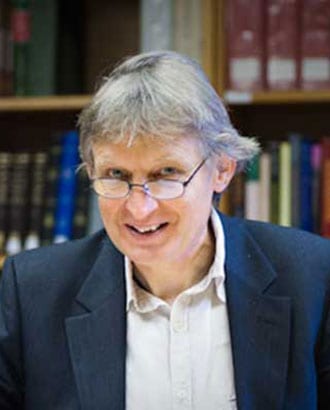
A talk by Dr Rembert Lutjeharms of the Oxford Centre for Hindu Studies
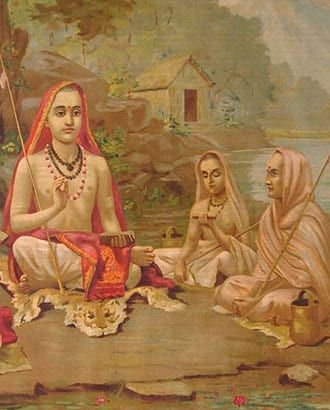
The Upanisads are among the most influential Hindu sacred texts. Though often cryptic, they form the foundation of Vedantic discourse, and still influence the religious imagination of countless spiritual seekers, both traditional and modern. Its ‘secret’ teachings are often presented through the voices of Vedic teachers, and the roles these teachers play is central to these teachings.
Focusing on the stories found in these religious texts, this talk will explore the character of the Upanisadic gurus, the roles they played, the way they taught, and their relationship with their disciples, and thereby reflect on the vale and ways of education in the modern world.
Belgrave Neighbourhood Centre Rothley Street Leicester LE4 6LF
A talk by Dr Jessica Frazier of the Oxford Centre for Hindu Studies.
Just how close are we to the divine, and just what role do we play for God?
Are we part of the divine ocean? God’s body? Movements in God’s dance, or notes in a divine song? Or just isolated mirrors of the divine light?
Thinkers from Sankara to Caitanya, Vivekananda and Gandhi have debated these issues – and our relations to other people, our relationship with the divine, and our hopes for Moksha all depend on the answer. In this session we visit the Gallery of Vedantas, and see which one wins your vote.
Friends Event: South India: The Heartland of Hinduism?
Birmingham Friends Event
Saturday, 5 October 2013 – 3:00pm to 5:00pm
Balaji Temple Dudley Road East Tividale West Midlands, B69 3DU
A talk by Dr Nick Sutton of the Oxford Centre for Hindu Studies
Most Hindus are aware of the major contribution to the tradition that has come from the South of India in terms of both religious belief and practice. In this talk, Nick Sutton will explore the history of South India along with its distinctive religious culture, and attempt to show how Dravidian Hinduism has had a major influence over all regions of the subcontinent
Nehru Centre talk: What the Mahabharata and Bhagavad-gita Reveal about the History and Religious Culture of India
Nehru Centre Event
Friday, 20 September 2013 – 6:30pm to 8:30pm
Nehru Centre
8 South Audley Street
London, W1K 1HF
A talk by Dr Nick Sutton of the Oxford Centre for Hindu Studies
In this talk Dr Sutton will discuss the interaction between religion, philosophy and politics in ancient India and focus in particular on the rise of the Buddhist and Jain traditions in the subcontinent. These and other newer forms of religion represented a direct challenge to the hegemony of the Vedic elite and received extensive patronage from the rulers of India, but it would be a mistake to simplistically represent this as being a confrontation between Buddhism and Jainism on the one hand and Hinduism on the other. Rather what we can detect is a much broader social and cultural movement that can observed in the Mahabharata and Bhagavad-gita as well. In this talk we will consider the nature of these changes that have had a profound effect on Indian society and history, observable down to the present day.
Balaji Temple Dudley Road East Tividale West Midlands, B69 3DU
A talk By Anuradha Dooney of the Oxford Centre for Hindu Studies
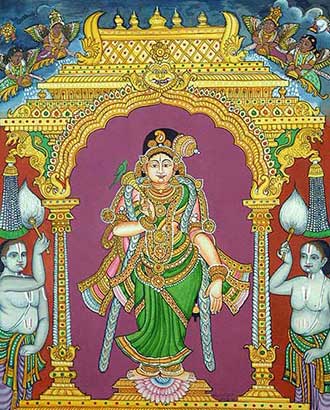
Indian culture is noted for its wonderful love poetry and none more beautiful than that of the bhakti poets. Their devotion has become one of the greatest influences on Hindu practice by cutting through stereotypes of caste, gender and religion.
This talk explores bhakti, or devotion, through the writings of Antal a South Indian poetess from the 8th century; Chaitanya, a 15th century Bengali saint and Mirabai, a 16th century Rajasthani princess. We will consider their understanding of love and why their influence is so enduring.
Friends Event: Speaking of Shiva: eko hi rudro na dvitiyaya tashtuh
Leicester Friends Event
Saturday, 31 August 2013 – 6:30pm to 9:00pm
Belgrave Neighbourhood Centre Rothley Street, Leicester LE4 6LF
A talk by Dr Nick Sutton of the Oxford Centre for Hindu Studies
Most Hindus will at various times in the year offer their devotion to Shiva but there is also a rich tradition, stretching back to the Vedas and Upanishads, which regards Shiva as the one Supreme Deity standing above all others, including even Vishnu and Krishna. Over the centuries Shaivism has taken on a number of different forms and in this talk Nick Sutton will consider the nature of the Shaiva tradition, past and present, and the significance of Shiva for Hinduism today.
Friends Event: The Six Systems of Hindu Philosophy
Leicester Friends Event
Saturday, 27 July 2013 – 6:30pm to 9:00pm
Belgrave Neighbourhood Centre Rothley Street Leicester LE4 6LF
A talk by Ramesh Pattni of the Oxford Centre for Hindu Studies
Hinduism has a rich and diverse philosophical tradition dating back thousands of years to the Upanisads in the later Vedic period. The oldest of these constitute the earliest philosophical compositions known to man. These were elaborate and highly sophisticated doctrinal schemes and metaphysical speculation developed within Hinduism. The talk is an introductory bird’s eye view of the six classical Hindu philosophical systems.
Friends Event: Hindu Thought in Western Literature
Birmingham Friends Event
Saturday, 6 July 2013 – 6:30pm to 8:30pm
Balaji Temple Dudley Road East Tividale West Midlands, B69 3DU
In this talk we will look at the influence of Hindu thought on Western literature. We will visit authors, periods, and themes, travelling from ancient times, through the medieval period, buffeted by the European Enlightenment and the Romantics, through German, British, and Americian representatives of the 18th – 20th centuries. We will see if the influence served to distinguish Indian perspectives as desirable or as detestable, or both, and look at issues of concern raised from this creative interaction.
Belgrave Neighbourhood Centre Rothley Street, Leicester LE4 6LF
A talk By Anuradha Dooney of the Oxford Centre for Hindu Studies
Indian culture is noted for its wonderful love poetry and none more beautiful than that of the bhakti poets. Their devotion has become one of the greatest influences on Hindu practice by cutting through stereotypes of caste, gender and religion.
This talk explores bhakti, or devotion, through the writings of Antal a South Indian poetess from the 8th century; Chaitanya, a 15th century Bengali saint and Mirabai, a 16th century Rajasthani princess. We will consider their understanding of love and why their influence is so enduring.
Friends Event: Hindu Thought in Western Literature
Saturday, 25 May 2013 – 6:30pm to 9:00pm
Belgrave Neighbourhood Centre Rothley Street Leicester LE4 6LF
In this talk we will look at the influence of Hindu thought on Western literature. We will visit authors, periods, and themes, travelling from ancient times, through the medieval period, buffeted by the European Enlightenment and the Romantics, through German, British, and Americian representatives of the 18th – 20th centuries. We will see if the influence served to distinguish Indian perspectives as desirable or as detestable, or both, and look at issues of concern raised from this creative interaction.