
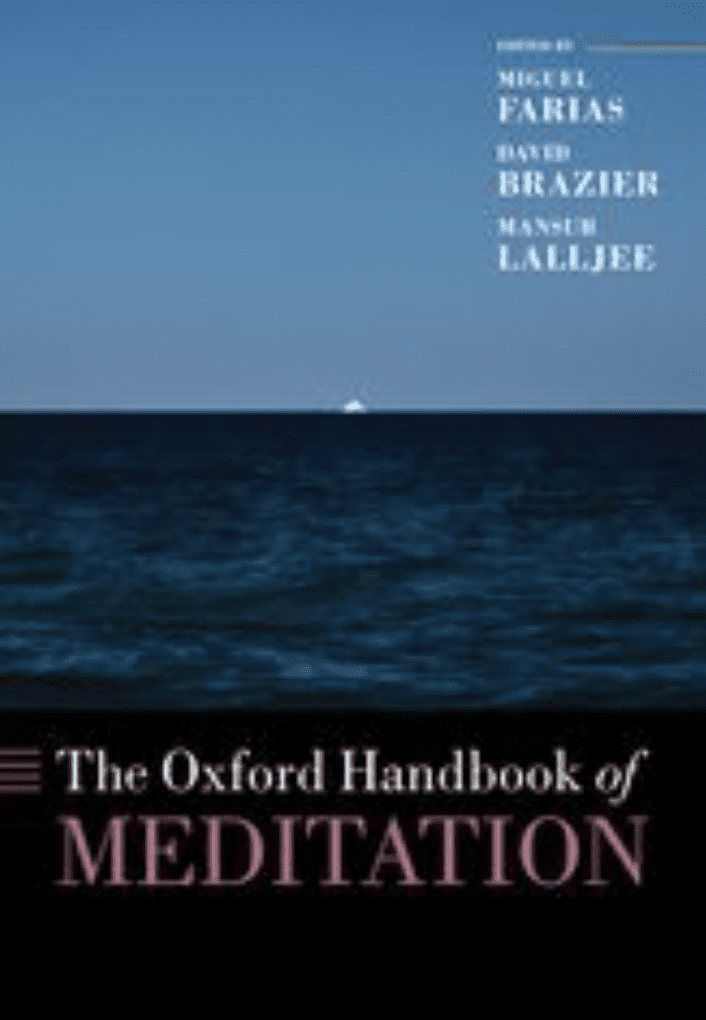
The Oxford Handbook of Meditation
Our two fellows Prof. Gavin Flood and Dr Bjarne Wernicke-Olesen have both contributed with an article in the recently published Oxford Handbook of Meditation edited by Miguel Farias, David Brazier, and Mansur Lalljee. Prof. Flood’s article is on Tantra and Dr. Wernicke-Olesen has written about Yoga. Below are the two abstracts borrowed from Oxford Handbooks Online website.
‘Tantra’ abstract:
Meditation has been integral to Hindu and Buddhist tantric traditions, in particular involving visualization or visual contemplation, practiced as part of ritual and also in its own right in order to achieve the goals of liberation from the cycle of reincarnation and also to achieve pleasure or power in this and other worlds. Visual contemplation is particularly focused on the body envisioned as being pervaded by a vertical axis at a subtle level, along which are located different levels of experience associated with different levels of the hierarchical cosmos. Power is awakened through meditation that rises up through these levels up to the very highest realization. This visual contemplation is thought to be of the subtle body as the support of the soul that leaves the physical body at death. There is also meditation without visualization that emphasizes the flow of pure awareness. This essay examines these practices in the major Hindu tantric traditions focused on the deity Śiva with some reference to the traditions of the Goddess, Viṣṇu, and Buddhism. These traditions influence the later Yoga tradition and have been transformed in the modern West.
‘Yoga’ abstract:
Yoga, meditation, and asceticism have been intimately linked throughout Indian religious history since the early beginnings in the ascetic reformism of India’s “axial age.” Traditional yoga addresses the main concerns of the ascetic reformism and is a practical method to solve the problem of suffering and attain liberation from this world. It primarily refers to the practice of meditation as described and systematized in the later classical yoga of Patañjali, where yoga is a synonym for non-cognitive samādhi, the highest state of consciousness. As indicated in the Upaniṣads and the yoga-auxiliaries, meditation consists in stilling the body, the senses, and the mind through a withdrawal of the senses, breath-control, and fixing the mind on a single point (including god or īśvara) as a way to reach samādhi. These techniques were combined with Sāṃkhya philosophy and other ideas and terminology (especially Buddhist) from the ascetic reformism discourse and systematized into a whole by Patañjali in the Pātañjalayogaśāstra in the fourth century ce. Via this kind of Brahmanical Sanskritic adaptation of ascetic practices, yoga and meditation became gradually incorporated into the mainstream of Indian religious life and were successfully exported to the Western world almost two millennia later.
For a link to the handbook click here
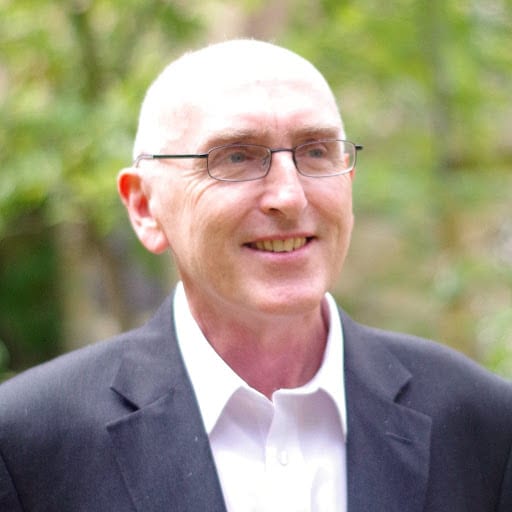
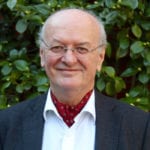 Prof. Alexis Sanderson: after a training in Classics, began his Indological career as a student of Sanskrit at Balliol College, Oxford in 1969. After graduation he spent six years studying the Kashmirian Śaiva literature in Kashmir with the Śaiva scholar and guru Swami Lakshman Joo from 1971 to 1977 while holding research positions at Merton and Brasenose Colleges. From 1977 to 1992 he was Associate Professor (University Lecturer) of Sanskrit in the University of Oxford and a Fellow of Wolfson College. In 1992 he was elected to the Spalding Professorship of Eastern Religions and Ethics at Oxford and thereby became a Fellow of All Souls College. He retired from that post in 2015. Since then he has been preparing a critical edition, with a translation and commentary, of the Tantrāloka, Abhinavagupta’s monumental exposition of the Śākta Śaivism of the Trika.
 Prof. Gavin Flood: is Professor of Hindu Studies and Comparative Religion at Oxford University, Academic Director of the Oxford Centre for Hindu Studies, and Senior Research Fellow at
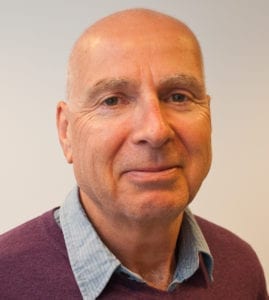 Prof. Knut Axel Jacobsen: is professor in the study of religions at the University of Bergen, Norway. Jacobsen’s main research fields are Hindu Studies, classical and contemporary Sāṃkhya and Yoga, South Asian pilgrimage traditions and ideas and rituals of space and time, and diasporas and the globalization of South Asia religions. He is the author of Prakṛti in Sāṃkhya-Yoga: Material Principle: Religious Experience, Ethical Implications (Peter Lang, 1999), Kapila: Founder of Sāṃkhya and Avatāra of Viṣṇu (Munshiram Manoharlal, 2008), Pilgrimage in the Hindu Tradition: Salvific Space (Routledge, 2013) and Yoga in Modern Hinduism: Hariharānanda Āraṇya and Sāṃkhyayoga (Routledge, 2018). Other recent publications include the edited volumes Routledge Handbook of Contemporary India (Routledge, 2016). Jacobsen is the founding Editor-in-Chief of the six volumes Brill’s Encyclopedia of Hinduism (Brill, 2009-2015) and the Brill’s Encyclopedia of Hinduism Online, and editor of the two volumes Handbook of Hinduism in Europe (Brill, 2020).
 Dr Bjarne Wernicke-Olesen: is a Research Lecturer at the centre and tutor in Hinduism, Buddhism and Sanskrit at the Faculty of Theology and Religion. He teaches courses, seminars and tutorials in Sanskrit, Pāli and Indian religions as well as courses and seminars on manuscript reading and theory and method in the Study of Religion. He is currently leading and managing a research project on Śākta Traditions and a research programme on the Comparative Study of Religion together with Prof. Gavin Flood. He is the founder of the OCHS Kathmandu Office and also the founder and supervisor of a student exchange programme with Aarhus University.
 Prof. David G. White is the J. F. Rowny Professor of Comparative Religions at the University of California, Santa Barbara, where he has been teaching since 1996. Prior to coming to Santa Barbara, he taught at the University of Virginia between 1986 and 1996. There, he founded the University of Virginia Study Abroad Program in Jodhpur, India in 1994. White is the sole foreign scholar to have ever been admitted to the Centre d’Études de l’Inde et de l’Asie du Sud in Paris, France, where he has been an active Research Fellow since 1992. His current research interest concerns contacts and exchanges in matters of demonology. Prof. White’s book publications include The Yoga Sutra of Patanjali (Princeton University Press, 2014), Yoga in Practice (Princeton University Press, 2012), Sinister Yogis (University Press of Chicago, 2009), Kiss of the Yogini: “Tantric Sex” in its South Asian Context (University Press of Chicago, 2003), The Alchemy Body: Siddha Traditions in Medieval India (University Press of Chicago, 1996).
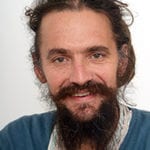 Dr James Mallinson: is Reader in Indology and Yoga Studies at SOAS University of London. He is Chair of SOAS’s Centre for Yoga Studies and the Principal Investigator of the ERC-funded Hatha Yoga Project, for which he is preparing five critical editions of Sanskrit texts on physical yoga and a monograph on its early history. Dr Mallinson is the author of several books and articles on yoga, and the co-author, with Dr. Mark Singleton, of Roots of Yoga (Penguin Classics 2017).
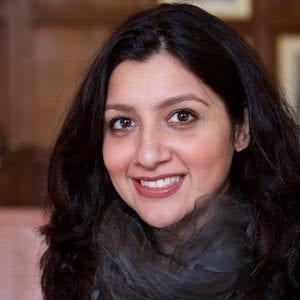 Dr Bihani Sarkar: is Lecturer (Hourly-Paid, fixed term) in Religious Studies: Hinduism and Buddhism (University of Winchester), Associate Faculty Member of the Oriental Institute (University of Oxford), and Research Member of Common Room, Wolfson College (University of Oxford). Bihani’s publications include Heroic Shāktism: The Cult of Durgā in Ancient Indian Kingship, (Oxford University Press, 2017) and Classical Sanskrit Tragedy: the concept of suffering and pathos in Medieval India (Bloomsbury, forthcoming 2021).
 und Zentralasienwissenschaften of the University of Leipzig and a Research Fellow at the Oxford Centre for Hindu Studies, affiliated with the Śākta Traditions Programme. Her interests focus on the Tantric religious traditions of the Śrīvidyā and of the Pāñcarātra, specifically on the philosophical and theological doctrines expressed in the relevant South Indian Sanskrit textual traditions. Her publications include:
 Fellow of the Royal Asiatic Society of Great Britain, the Royal Society of Canada, and the Oxford Centre for Hindu Studies, is Professor Emerita at the University of British Columbia, and former Director of its Centre for India and South Asia Research. She taught there in the departments of Religious Studies, Gender and Womens’ Studies, and the Institute of Asian Research. Professor Bose holds degrees in Sanskrit and Comparative Literature from the universities of Calcutta, UBC and Oxford. She specializes in Sanskrit texts of dramaturgy, religions of India, the Rāmāyaṇa, and Gender Studies, with major publications in all these fields. Her most recent publications are: Women in Hinduism (Oxford: in press with OCHS, 2021); “Dance in the Sanskritic Tradition: Building Bridges Between Text and Performance,” (article to be published in a memorial volume for the late Kapila Vatsyayan, Delhi: D. K. Printworld, 2021); The Goddess (Oxford: Oxford University Press, 2018); The Ramayana in Bengali Folk Paintings (New Delhi: Niyogi, 2016); “The Ramayana in the Hindu Tradition,” in Oxford Bibliographies in Hinduism (Oxford online 2016); “Theology, Sexuality and Gender in the Hindu Tradition,” in the Oxford Handbook of Theology, Gender and Sexuality, ed. Adrian Thatcher (Oxford: Oxford University Press, 2015).
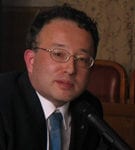 is Professor of Classical Indology at the University of Hamburg. His doctoral work at the University of Leiden was in classical Vaiśeṣika. He has been a Visiting Fellow at All Souls College, Wolfson College Oxford, and the International Institute for Buddhist Studies, Tokyo, and a Sabbatical Fellow of the American Philosophical Society. He is one of the world’s foremost experts in tantric traditions in pre-13th century South Asia, especially Vajrayāna Buddhism, and is an expert in classical Sanskrit poetry, classical Indian philosophy, Purāṇic literature, and manuscript studies.
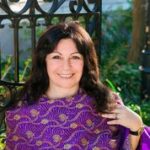 in the Department of Religious Studies at the College of Charleston. Her PhD was from the University of Chicago, and her MTS was from Emory University. Her research areas include Mysticism, Religions of India, Psychology of Religion, Women and Religion, and Ritual Studies. She did several years of field research in West Bengal, funded by Fulbright and the American Institute of Indian Studies, which focused on religious experience and modern Shaktism. Her books include: Lost Ecstasy: Its Decline and Transformation in Religion (Palgrave Macmillan, 2018), Offering Flowers, Feeding Skulls: Popular Goddess Worship in West Bengal (Oxford University Press, 2004), Making Virtuous Daughters and Wives: An Introduction to the Brata Rituals of Bengal (State University of New York Press, 2003), and The Madness of the Saints: Ecstatic Religion in Bengal (University of Chicago Press, 1989). Edited volumes include: Religious Experience in the Hindu Tradition. Religions (journal, Routledge 2019), and Perceiving the Divine through the Human Body: Mystical Sensuality, edited by Thomas Cattoi and June McDaniel. (Palgrave Macmillan, 2011). Her current work draws comparisons between Bengali and Balinese Hinduism, and examines religious emotion in different traditions.
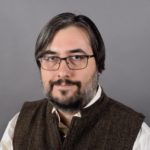 The University of Massachusetts Boston. Prof. Hatley specialises in Asian religions, Hinduism, Sanskrit, tantric studies, Śaivism, yoga, Hindu goddess traditions, and medieval India. His research focuses on the tantric or esoteric traditions of medieval India, especially Tantric Shaivism, and on the premodern history of Yoga. Prof. Hatley completed his PhD in 2007 at the University of Pennsylvania under the direction of Harunaga Isaacson, after which he taught at Concordia University, Montréal, until 2014. His publications concern goddess cults, yoga, tantric ritual, and the technical terminology of the Śaiva tantras. Currently, he is preparing a monograph on the Yoginī cults of early medieval India, and a multi-volume study and critical edition of the Brahmayāmalatantra, one of the earliest surviving works of Śaiva tantric literature focused upon goddesses.