
Lecture list
Trinity Term 2021
Sunday 25th April – Saturday 19th June 2021
Due to Covid Restriction and in line with University Policy all lectures and seminars will be held online. For access, please contact the convenors or lecturer by email. For access to the Hinduism 2: Modern Hinduism and Sanskrit Prelims lectures, please contact the Faculty of Theology and Religion. The Śākta Traditions lectures will be available on the OCHS YouTube channel.
Sanskrit Prelims
Week 1-4, Monday 14.00-15.30, Friday 14.00-15.30
Dr Bjarne Wernicke-Olesen
The course provides an introduction to Sanskrit for the preliminary paper of the Theology and Religion Faculty in Elementary Sanskrit. A range of relevant Hindu and Buddhist texts will be chosen for translation and philological comment. The class is designed to introduce students of Theology and Religion to the essentials of Sanskrit grammar, syntax, and vocabulary and its importance for the exegesis of Sanskrit texts. Students will learn to appreciate the interpretative nature of translation as a central discipline for the study of religions. By the end of the course students will have gained a basic competency in translating classical Sanskrit and reading relevant passages from texts such as the Chāndogya Upaniṣad, the Bhagavadgītā and the Buddhist Heart Sūtra. The course book will be Walter Maurer’s The Sanskrit Language. Sanskrit Prelims continues throughout Michaelmas and Hilary Terms and for the first four weeks of Trinity.
Readings in Vedānta
Week 1-8, Wednesday 10.00-11.00
Dr Rembert Lutjeharms (rembert@ochs.org.uk)
Vedānta—theology grounded in the systematic exegesis of the Upaniṣads—has for centuries been the primary discourse for Vaiṣṇava thought. These reading sessions are intended for students who have at least an introductory knowledge of Sanskrit and are interested in Vedānta texts.
Readings in Phenomenology
Weeks 1-8, Monday 12.00-1.00
Prof. Gavin Flood
Phenomenology is one of the most important developments in philosophy in the twentieth century, and it has also had a deep impact on other theoretical fields more widely conceived. This series continues the reading of Martin Heidegger’s Being and Time.
Comparative Religion Seminar
Week 1, Thursday 29th April, 11.00-12.00.
Prof. Gavin Flood
The purpose of this seminar is to begin to explore new ways of practicing and theorizing comparative religion. The comparative study of religion went into abeyance with its critique from social constructivist positions, skeptical not only of the category ‘religion’ but of comparison generally in the belief that cultural and social particularity and differ-ence needs to take precedence. The purpose of this seminar is therefore to open up a conversation about what Comparative Religion means in the contemporary world and what its future could be, especially in relation to Theology. Oxford is in a unique position with specialist areas in Theology, Biblical Studies, and Oriental Studies to develop language-focused comparative research fields.
Arguments in Indian Philosophy: Reality, identity, scepticism, ethics
Dr Jessica Frazier (jessica.frazier@theology.ox.
The classical problems of philosophy are often global, attracting concerted debate across the philosophical traditions of India, Greece, and beyond. This has led to a number of novel philosophical solutions emerging over the millennia, offering some interesting challenges to modern philosophy… ‘Things’ as we know them may be dissolved into fleeting phenomena, reconceived as a single object, and become a tangle of ‘time-worms’. Reality may be revealed as an ocean of consciousness or a seed-bed of generative powers. Compassion may grow best from the death of the ego… or happiness may become just one paint on the palette of possible values.
In these four classes we’ll look at four arguments in Indian philosophy. We will look at the topics of:
- Weds 28th April, 2.00-3.00. Monism: Does nothing exist… or is everything one?”
- Weds. 12th May, 2.00-3.00. Selfhood: What am I made of, and what does change mean for me?
- Weds. 26th May, 2.00-3.00. Scepticism: What are the limits and possibilities of truth?
- Weds. 9th June, 2.00-3.00. Ethics: Can I be ethical if I am not ‘real’?
All welcome.
Śākta Traditions Lecture Series
Hinduism cannot be understood without the Goddess (Devi/Śakti) and the goddess-oriented Śākta traditions. The Goddess pervades Hinduism at all levels, from aniconic village deities to high-caste pan-Hindu goddesses to esoteric, tantric goddesses. Furthermore, tantric goddesses have played a significant role in the formation of tantric Buddhism, or what is sometimes referred to as ‘Śākta Buddhism’. Nevertheless, these highly influential forms of South Asian religion have only recently begun to draw scholarly attention. Taken together, they form ‘Śāktism’, which is considered one of the major branches of Hinduism next to Śaivism, Vaiṣṇavism and Smārtism. These lectures continue to explore this theme.
- Weds. 5th May 2.00-3.00, Dr. Bjarne Wernicke-Olesen, Śaktism and Śākta Traditions Part 2’.
- Weds. 19th May. 2.00-3.00, Prof. Mandakranta Bose – Divinity and Femininity – Śakti in the World
- Weds. 2nd June, 2.00-3.00, Prof. Harunaga Isaacson, TBA
- Weds. 16th June, 2.00-3.00, Dr Silje Lyngar Einarsen TBA
 Dr Bihani Sarkar: is Lecturer (Hourly-Paid, fixed term) in Religious Studies: Hinduism and Buddhism (University of Winchester), Associate Faculty Member of the Oriental Institute (University of Oxford), and Research Member of Common Room, Wolfson College (University of Oxford). Bihani’s publications include Heroic Shāktism: The Cult of Durgā in Ancient Indian Kingship, (Oxford University Press, 2017) and Classical Sanskrit Tragedy: the concept of suffering and pathos in Medieval India (Bloomsbury, forthcoming 2021).
 Dr James Mallinson: is Reader in Indology and Yoga Studies at SOAS University of London. He is Chair of SOAS’s Centre for Yoga Studies and the Principal Investigator of the ERC-funded Hatha Yoga Project, for which he is preparing five critical editions of Sanskrit texts on physical yoga and a monograph on its early history. Dr Mallinson is the author of several books and articles on yoga, and the co-author, with Dr. Mark Singleton, of Roots of Yoga (Penguin Classics 2017).
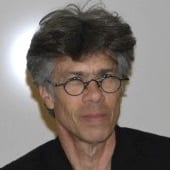 Prof. David G. White is the J. F. Rowny Professor of Comparative Religions at the University of California, Santa Barbara, where he has been teaching since 1996. Prior to coming to Santa Barbara, he taught at the University of Virginia between 1986 and 1996. There, he founded the University of Virginia Study Abroad Program in Jodhpur, India in 1994. White is the sole foreign scholar to have ever been admitted to the Centre d’Études de l’Inde et de l’Asie du Sud in Paris, France, where he has been an active Research Fellow since 1992. His current research interest concerns contacts and exchanges in matters of demonology. Prof. White’s book publications include The Yoga Sutra of Patanjali (Princeton University Press, 2014), Yoga in Practice (Princeton University Press, 2012), Sinister Yogis (University Press of Chicago, 2009), Kiss of the Yogini: “Tantric Sex” in its South Asian Context (University Press of Chicago, 2003), The Alchemy Body: Siddha Traditions in Medieval India (University Press of Chicago, 1996).
 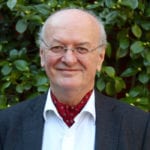 Prof. Alexis Sanderson: after a training in Classics, began his Indological career as a student of Sanskrit at Balliol College, Oxford in 1969. After graduation he spent six years studying the Kashmirian Śaiva literature in Kashmir with the Śaiva scholar and guru Swami Lakshman Joo from 1971 to 1977 while holding research positions at Merton and Brasenose Colleges. From 1977 to 1992 he was Associate Professor (University Lecturer) of Sanskrit in the University of Oxford and a Fellow of Wolfson College. In 1992 he was elected to the Spalding Professorship of Eastern Religions and Ethics at Oxford and thereby became a Fellow of All Souls College. He retired from that post in 2015. Since then he has been preparing a critical edition, with a translation and commentary, of the Tantrāloka, Abhinavagupta’s monumental exposition of the Śākta Śaivism of the Trika.
 Prof. Gavin Flood: is Professor of Hindu Studies and Comparative Religion at Oxford University, Academic Director of the Oxford Centre for Hindu Studies, and Senior Research Fellow at
 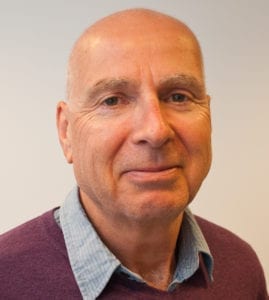 Prof. Knut Axel Jakobsen: is professor in the study of religions at the University of Bergen, Norway. Jacobsen’s main research fields are Hindu Studies, classical and contemporary Sāṃkhya and Yoga, South Asian pilgrimage traditions and ideas and rituals of space and time, and diasporas and the globalization of South Asia religions. He is the author of Prakṛti in Sāṃkhya-Yoga: Material Principle: Religious Experience, Ethical Implications (Peter Lang, 1999), Kapila: Founder of Sāṃkhya and Avatāra of Viṣṇu (Munshiram Manoharlal, 2008), Pilgrimage in the Hindu Tradition: Salvific Space (Routledge, 2013) and Yoga in Modern Hinduism: Hariharānanda Āraṇya and Sāṃkhyayoga (Routledge, 2018). Other recent publications include the edited volumes Routledge Handbook of Contemporary India (Routledge, 2016). Jacobsen is the founding Editor-in-Chief of the six volumes Brill’s Encyclopedia of Hinduism (Brill, 2009-2015) and the Brill’s Encyclopedia of Hinduism Online, and editor of the two volumes Handbook of Hinduism in Europe (Brill, 2020).
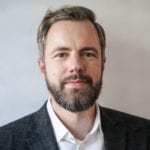 Dr Bjarne Wernicke-Olesen: is a Research Lecturer at the centre and tutor in Hinduism, Buddhism and Sanskrit at the Faculty of Theology and Religion. He teaches courses, seminars and tutorials in Sanskrit, Pāli and Indian religions as well as courses and seminars on manuscript reading and theory and method in the Study of Religion. He is currently leading and managing a research project on Śākta Traditions and a research programme on the Comparative Study of Religion together with Prof. Gavin Flood. He is the founder of the OCHS Kathmandu Office and also the founder and supervisor of a student exchange programme with Aarhus University.